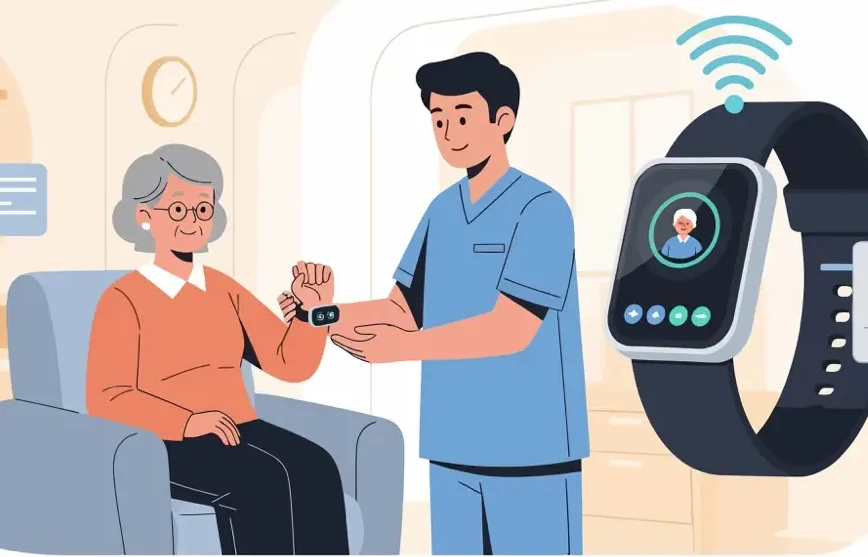
My Medic Watch is an AI-powered monitoring platform that works with connected wearables. It supports safer care by detecting falls, seizures, and cardiac-related events in real time and making those incidents visible to carers and care teams.
The platform is designed for fall, seizure, and cardiac event detection. Detection can vary depending on the device, configuration, and environment, but the goal is to identify critical incidents as they happen, not hours later.
My Medic Watch can support different settings, from individuals and carers to hospitals, aged care providers, home care organisations, insurers, and research partners. The platform can be adapted depending on the care model and what the organisation needs to monitor and track.
Alerts are sent to the configured app or portal so carers or care teams can review what happened and respond based on their workflow. The goal is to reduce delays, improve visibility, and support timely intervention when it matters.
It continuously monitors signals from supported wearable sensors and applies AI algorithms to identify patterns linked to risk events. When something looks like a fall, seizure, or cardiac event, it triggers an alert so the right people can act earlier.
It’s passive. There’s no button pressing, no voice prompts, and no camera required. The idea is simple: the wearable does the monitoring in the background so the person can keep living normally.
No. It’s designed to support earlier awareness and faster response, but it does not provide medical advice, diagnosis, or treatment. Clinical decisions should always be made by qualified healthcare professionals.
Yes. My Medic Watch can include a portal/dashboard that supports real-time visibility, alerts, and oversight across multiple users. This helps teams monitor risk, review incidents, and keep a clearer picture of what’s happening across a service or facility.
Continuous remote monitoring that gives healthcare teams visibility between visits and enables faster, proactive intervention.

AI-powered detection using a connected smartwatch to detect falls, seizures, and cardiac events.

My Medic Watch is designed to work with Apple, Samsung, and Google smartwatches. Supported models can depend on the use case and region, and additional device support may be added over time as the platform evolves.
Yes. We use appropriate technical and organisational safeguards to protect data and limit access to authorised users. We also work with trusted infrastructure and service providers to support secure storage and processing.
We aim to follow applicable privacy and security requirements, and the exact compliance approach depends on your region and use case. If needed, we can confirm what applies to your organisation during onboarding or a demo.
It depends on the setup. Some deployments can start quickly using off-the-shelf devices, while larger rollouts may include training, onboarding, configuration, and integrations. We’ll guide you based on your goals and environment.
For the most consistent monitoring, yes. The more consistently it’s worn, the better the coverage for incident detection. Exact wear guidance can depend on the care setting and what your team is trying to monitor.
No. We do not sell personal information. Data is used to operate the service, improve the platform, and support the intended care and monitoring outcomes.
Yes. Integrations can be supported to fit into existing workflows, including API-based options where required. If you have a specific platform or system in mind, we can review what’s needed and the best approach.
You can book a demo through the website or contact us directly. We’ll ask a few questions about your setting and goals, then show you the platform and the most relevant use cases for your team.
Praesent egestas luctus erat, sed congue felis aliquet sit amet. Duis ultricies, lectus vitae tristique convallis, orci velit feugiat nisi, sit amet scelerisque.


Continuous remote monitoring that gives healthcare teams visibility between visits and enables faster, proactive intervention.